Buy smeactor.eu ?
We are moving the project
smeactor.eu .
Are you interested in purchasing the domain
smeactor.eu ?
domain@kv-gmbh.de · 0541-91531010
Buy smeactor.eu ?
What are the following IUPAC nomenclatures?
1. IUPAC nomenclature for organic compounds: This is a set of rules and guidelines used to name organic compounds systematically, based on the structure and composition of the molecule. It ensures that each compound has a unique and unambiguous name, making it easier to communicate and study. 2. IUPAC nomenclature for inorganic compounds: Similar to organic compounds, this system provides a systematic way to name inorganic compounds based on their composition and structure. It helps to distinguish between different compounds and allows for easier communication and study of inorganic chemistry. 3. IUPAC nomenclature for coordination compounds: This system is used to name coordination compounds, which consist of a central metal ion bonded to ligands. The naming is based on the type and number of ligands, as well as the oxidation state of the metal ion, ensuring a clear and consistent naming system for these complex compounds. **
How is the IUPAC name determined?
The IUPAC name of a compound is determined by following a set of rules established by the International Union of Pure and Applied Chemistry (IUPAC). These rules consider the structure and composition of the compound, and prioritize certain functional groups and substituents to determine the root name of the compound. The name is then modified with prefixes, suffixes, and numerical locants to indicate the specific arrangement and bonding of atoms within the compound. The goal of the IUPAC naming system is to provide a standardized and systematic way of naming chemical compounds to ensure clarity and consistency in communication within the scientific community. **

Similar search terms for IUPAC
Top-Angebote
Products related to IUPAC:
-
Picador Bad Blood: Secrets and Lies in a Silicon Valley Startup by John Carreyrou - Paperback - True Crime Business Book - Theranos Scandal ExposéBad Blood is John Carreyrou's Pulitzer Prize-winning investigation into Theranos, the blood-testing startup once valued at over $9 billion before collapsing into one of the biggest corporate frauds in American history. This gripping true-crime business narrative follows founder Elizabeth Holmes from Silicon Valley darling to disgraced fraudster, exposing the culture of secrecy, intimidation, and deception that hid a technology which simply didn't work — with devastating consequences for real patients. In 2014, Elizabeth Holmes was celebrated as the next Steve Jobs: a charismatic Stanford dropout whose startup promised to revolutionise healthcare with a single drop of blood. Backed by high-profile investors and board members, Theranos raised hundreds of millions of dollars on the promise of miniaturised blood-testing devices that could run hundreds of tests. This book is a paperback edition published by Picador, suitable for adult readers (18+).4,99 £*Shipping: 2,99 £Secure redirect to the provider
-
Various Publishers Billion Dollar Spy, Billion Dollar Whale, The $100 Startup - 3 Books Collection Set - Paperback - True Crime, Finance & Business Non-Fiction Gift SetThis three-book non-fiction collection includes The Billion Dollar Spy by David E. Hoffman, Billion Dollar Whale by Tom Wright and Bradley Hope, and The $100 Startup by Chris Guillebeau. The books offer gripping true stories of espionage and financial fraud, alongside practical entrepreneurship advice. The Billion Dollar Spy uncovers Cold War spy-craft in Moscow, Billion Dollar Whale exposes one of history's largest financial scandals, and The $100 Startup delivers a hands-on blueprint for building a business from scratch. The books are in new condition, published by Icon Books, Scribe UK, and Pan Macmillan, and are suitable for adult readers.13,99 £*Shipping: 2,99 £Secure redirect to the provider
-
Rethink Press Data Means Business by Jason Foster & Barry Green - Paperback - Practical Guide to Data-Driven Business Growth and Culture ChangeData Means Business is a practical guide for leaders who want to turn raw data into real commercial value. Written by data leadership experts Jason Foster and Barry Green, it sets out a proven framework for building a data-driven culture, generating momentum for change, and scaling with confidence. This book is ideal for CEOs, executives, and managers who want to move their organisation from data confusion to data-powered growth. The authors draw on decades of combined experience helping businesses unlock value from their data and AI. The book provides a clear, actionable roadmap for organisations to use data effectively, without getting lost in technical jargon. It covers 274 pages of practical advice and guidance.2,99 £*Shipping: 2,99 £Secure redirect to the provider
-
Sesderma Reti Age 5 Liposomal Serum Anti-Aging Innovation 30mLA facial serum for wrinkles and signs of ageing. Reduces wrinkles and fine lines. Hydrates and strengthens barrier. Restores youthful radiance. 5-Retinoid System: smooths wrinkles, accelerates renewal, and boosts collagen. Biomimetic Peptides: fill expression lines by stimulating collagen synthesis.41,69 £*Shipping: 5,34 £Secure redirect to the provider




-
Do you know the IUPAC name?
Yes, IUPAC (International Union of Pure and Applied Chemistry) names are systematic names given to chemical compounds based on a set of rules established by the IUPAC. These names are used to uniquely identify and describe the structure of a compound, regardless of language or region. IUPAC names are important in the field of chemistry as they provide a standardized way to communicate about chemical compounds. **
-
What is the IUPAC name of perchlorate?
The IUPAC name of perchlorate is tetrachloratooxidane. **
-
What is the IUPAC name for this halogenalkane?
The IUPAC name for the given halogenalkane is 1-chloro-3-methylbutane. This name is derived from the longest carbon chain in the molecule, which contains four carbon atoms. The chlorine atom is located on the first carbon of the chain, and there is a methyl group attached to the third carbon. Therefore, the complete IUPAC name for this compound is 1-chloro-3-methylbutane. **
-
Are there different versions of the IUPAC nomenclature?
Yes, there are different versions of the IUPAC nomenclature. The IUPAC regularly updates and revises its nomenclature rules to reflect new discoveries and developments in chemistry. These updates ensure that the nomenclature remains consistent and accurate across different areas of chemistry. Additionally, there may be specific nomenclature guidelines for different types of compounds, such as organic compounds, inorganic compounds, and polymers. **


How are compounds named according to IUPAC rules?
Compounds are named according to IUPAC (International Union of Pure and Applied Chemistry) rules by identifying the longest carbon chain in the molecule and determining the functional groups present. The name begins with the prefix indicating the number of carbon atoms in the longest chain, followed by the root of the name indicating the type of carbon-carbon bond present. Then, the functional groups are named and assigned a position number based on their location on the carbon chain. Finally, any substituent groups are named and assigned a position number, and the names are all combined in a specific order to form the complete IUPAC name of the compound. **
What is the IUPAC name for citric acid?
The IUPAC name for citric acid is 2-hydroxypropane-1,2,3-tricarboxylic acid. This name reflects the chemical structure of citric acid, which contains three carboxylic acid groups and a hydroxyl group. The IUPAC name is used to systematically name organic compounds based on their chemical structure, providing a standardized way to identify and communicate about different molecules. **
Top-Angebote
Products related to IUPAC:
-
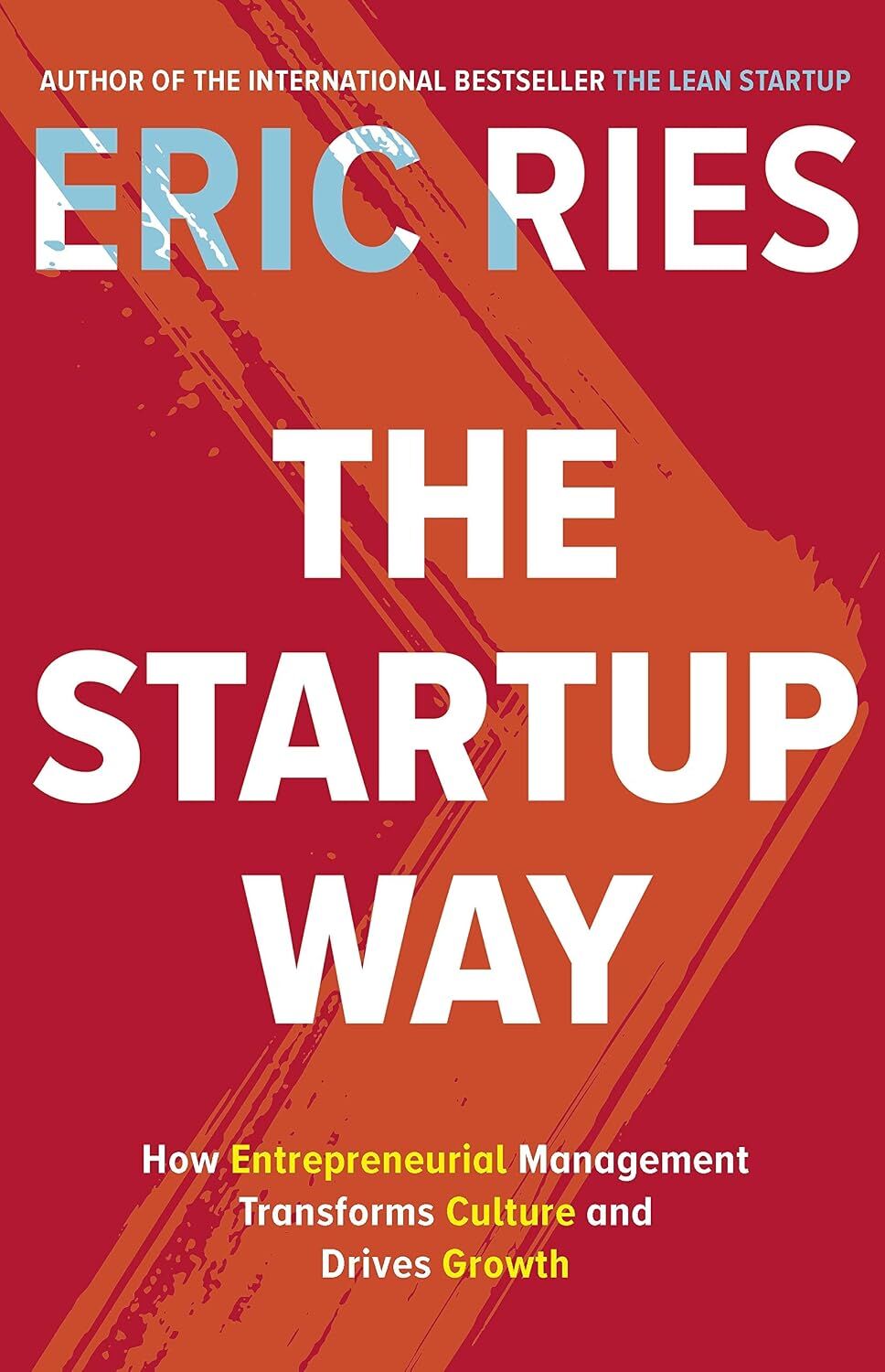
Portfolio Penguin Eric Ries Collection 2 Books Set - The Lean Startup & The Startup Way - Paperback - Business & Entrepreneurship Bundle for Founders and ManagersThis two-book collection brings together Eric Ries's most influential works on modern entrepreneurship: The Lean Startup and The Startup Way. Together they set out a rigorous, practical methodology for building successful businesses in conditions of extreme uncertainty, then show how those same lean principles can be scaled up to transform established, bureaucratic organisations. The Lean Startup introduced the world to concepts such as the minimum viable product, validated learning, and the build-measure-learn feedback loop. Drawing on his own experiences as a founder and advisor, Ries argues that startups succeed not through grand five-year plans but through rapid experimentation and continuous improvement. Ideal for founders, managers, and anyone curious about innovation, this set is a complete primer on lean thinking from the man who coined the term. The books are in brand new condition, published by Portfolio Penguin, and are suitable for adult readers.10,99 £*Shipping: 2,99 £Secure redirect to the provider
-
Harper Business Smart Startups: What Every Entrepreneur Needs to Know by Catalina Daniels & James H. Sherman - Hardback - Business & Entrepreneurship Non FictionSmart Startups: What Every Entrepreneur Needs to Know is a candid guide to building a company that lasts. Written by two Harvard Business School classmates turned founders and angel investors, it goes beyond classroom theory to show what actually happens inside eighteen startups launched by fellow HBS graduates. Packed with honest case studies, hard-won lessons, and unexpected pitfalls, this book is essential reading for anyone serious about turning an idea into a viable business. The authors, Catalina Daniels and James H. Sherman, met as classmates at Harvard Business School, where they studied the fundamentals of entrepreneurship together. Years later, after each had founded and exited multiple companies and become active angel investors, they discovered that their real-world experiences often diverged sharply from the conventional wisdom they learned in school.11,99 £*Shipping: 2,99 £Secure redirect to the provider
-
Picador Bad Blood: Secrets and Lies in a Silicon Valley Startup by John Carreyrou - Paperback - True Crime Business Book - Theranos Scandal ExposéBad Blood is John Carreyrou's Pulitzer Prize-winning investigation into Theranos, the blood-testing startup once valued at over $9 billion before collapsing into one of the biggest corporate frauds in American history. This gripping true-crime business narrative follows founder Elizabeth Holmes from Silicon Valley darling to disgraced fraudster, exposing the culture of secrecy, intimidation, and deception that hid a technology which simply didn't work — with devastating consequences for real patients. In 2014, Elizabeth Holmes was celebrated as the next Steve Jobs: a charismatic Stanford dropout whose startup promised to revolutionise healthcare with a single drop of blood. Backed by high-profile investors and board members, Theranos raised hundreds of millions of dollars on the promise of miniaturised blood-testing devices that could run hundreds of tests. This book is a paperback edition published by Picador, suitable for adult readers (18+).4,99 £*Shipping: 2,99 £Secure redirect to the provider
-
Various Publishers Billion Dollar Spy, Billion Dollar Whale, The $100 Startup - 3 Books Collection Set - Paperback - True Crime, Finance & Business Non-Fiction Gift SetThis three-book non-fiction collection includes The Billion Dollar Spy by David E. Hoffman, Billion Dollar Whale by Tom Wright and Bradley Hope, and The $100 Startup by Chris Guillebeau. The books offer gripping true stories of espionage and financial fraud, alongside practical entrepreneurship advice. The Billion Dollar Spy uncovers Cold War spy-craft in Moscow, Billion Dollar Whale exposes one of history's largest financial scandals, and The $100 Startup delivers a hands-on blueprint for building a business from scratch. The books are in new condition, published by Icon Books, Scribe UK, and Pan Macmillan, and are suitable for adult readers.13,99 £*Shipping: 2,99 £Secure redirect to the provider
-
What are the following IUPAC nomenclatures?
1. IUPAC nomenclature for organic compounds: This is a set of rules and guidelines used to name organic compounds systematically, based on the structure and composition of the molecule. It ensures that each compound has a unique and unambiguous name, making it easier to communicate and study. 2. IUPAC nomenclature for inorganic compounds: Similar to organic compounds, this system provides a systematic way to name inorganic compounds based on their composition and structure. It helps to distinguish between different compounds and allows for easier communication and study of inorganic chemistry. 3. IUPAC nomenclature for coordination compounds: This system is used to name coordination compounds, which consist of a central metal ion bonded to ligands. The naming is based on the type and number of ligands, as well as the oxidation state of the metal ion, ensuring a clear and consistent naming system for these complex compounds. **
-
How is the IUPAC name determined?
The IUPAC name of a compound is determined by following a set of rules established by the International Union of Pure and Applied Chemistry (IUPAC). These rules consider the structure and composition of the compound, and prioritize certain functional groups and substituents to determine the root name of the compound. The name is then modified with prefixes, suffixes, and numerical locants to indicate the specific arrangement and bonding of atoms within the compound. The goal of the IUPAC naming system is to provide a standardized and systematic way of naming chemical compounds to ensure clarity and consistency in communication within the scientific community. **
-
Do you know the IUPAC name?
Yes, IUPAC (International Union of Pure and Applied Chemistry) names are systematic names given to chemical compounds based on a set of rules established by the IUPAC. These names are used to uniquely identify and describe the structure of a compound, regardless of language or region. IUPAC names are important in the field of chemistry as they provide a standardized way to communicate about chemical compounds. **
-
What is the IUPAC name of perchlorate?
The IUPAC name of perchlorate is tetrachloratooxidane. **
Similar search terms for IUPAC
-
Rethink Press Data Means Business by Jason Foster & Barry Green - Paperback - Practical Guide to Data-Driven Business Growth and Culture ChangeData Means Business is a practical guide for leaders who want to turn raw data into real commercial value. Written by data leadership experts Jason Foster and Barry Green, it sets out a proven framework for building a data-driven culture, generating momentum for change, and scaling with confidence. This book is ideal for CEOs, executives, and managers who want to move their organisation from data confusion to data-powered growth. The authors draw on decades of combined experience helping businesses unlock value from their data and AI. The book provides a clear, actionable roadmap for organisations to use data effectively, without getting lost in technical jargon. It covers 274 pages of practical advice and guidance.2,99 £*Shipping: 2,99 £Secure redirect to the provider
-
Sesderma Reti Age 5 Liposomal Serum Anti-Aging Innovation 30mLA facial serum for wrinkles and signs of ageing. Reduces wrinkles and fine lines. Hydrates and strengthens barrier. Restores youthful radiance. 5-Retinoid System: smooths wrinkles, accelerates renewal, and boosts collagen. Biomimetic Peptides: fill expression lines by stimulating collagen synthesis.41,69 £*Shipping: 5,34 £Secure redirect to the provider
-
The Readers Paradise The Lean Startup, Managing Business Start-Ups & The Master Mind - 3 Books Collection Set by Eric Ries, V.K.Stevin & Napoleon Hill - New PaperbackThis 3-book collection set brings together The Lean Startup by Eric Ries, Managing Business Start-Ups by V.K.Stevin, and The Master Mind by Napoleon Hill. The books cover startup methodology, practical business management, and the mindset habits behind lasting success. They provide a rounded toolkit for anyone building or growing a venture, from first-time founders to seasoned managers looking to sharpen their thinking. The Lean Startup is a guide to building companies that work, showing entrepreneurs how to test ideas quickly, learn from real customer feedback, and avoid wasting time and money on products nobody wants.22,99 £*Shipping: 2,99 £Secure redirect to the provider
-
Rethink Press Scale Up Millionaire: How To Sell Your Way To A Fast Growth, High Value Enterprise by Gordon McAlpine - Paperback - Business & Sales Growth GuideScale Up Millionaire is a practical sales and growth guide for founders and business leaders who want to expand their businesses quickly without giving away equity or taking on debt. Written by entrepreneur Gordon McAlpine, it distills the exact selling and scaling methods he used to build and exit a global technology company from a standing start. This book offers a clear, actionable route to sustainable, high-value growth, whether you are a first-time founder or an experienced business owner. Gordon McAlpine sets out his proven 6-Step Scale Up Process, built entirely from real-world experience rather than theory. He shows readers how to convert a solid product into a compelling market proposition, channel personal passion through 'Founder Selling' to win early customers, and build a strong sales pipeline that creates lasting results.2,99 £*Shipping: 2,99 £Secure redirect to the provider
-
What is the IUPAC name for this halogenalkane?
The IUPAC name for the given halogenalkane is 1-chloro-3-methylbutane. This name is derived from the longest carbon chain in the molecule, which contains four carbon atoms. The chlorine atom is located on the first carbon of the chain, and there is a methyl group attached to the third carbon. Therefore, the complete IUPAC name for this compound is 1-chloro-3-methylbutane. **
-
Are there different versions of the IUPAC nomenclature?
Yes, there are different versions of the IUPAC nomenclature. The IUPAC regularly updates and revises its nomenclature rules to reflect new discoveries and developments in chemistry. These updates ensure that the nomenclature remains consistent and accurate across different areas of chemistry. Additionally, there may be specific nomenclature guidelines for different types of compounds, such as organic compounds, inorganic compounds, and polymers. **
-
How are compounds named according to IUPAC rules?
Compounds are named according to IUPAC (International Union of Pure and Applied Chemistry) rules by identifying the longest carbon chain in the molecule and determining the functional groups present. The name begins with the prefix indicating the number of carbon atoms in the longest chain, followed by the root of the name indicating the type of carbon-carbon bond present. Then, the functional groups are named and assigned a position number based on their location on the carbon chain. Finally, any substituent groups are named and assigned a position number, and the names are all combined in a specific order to form the complete IUPAC name of the compound. **
-
What is the IUPAC name for citric acid?
The IUPAC name for citric acid is 2-hydroxypropane-1,2,3-tricarboxylic acid. This name reflects the chemical structure of citric acid, which contains three carboxylic acid groups and a hydroxyl group. The IUPAC name is used to systematically name organic compounds based on their chemical structure, providing a standardized way to identify and communicate about different molecules. **
* All prices are inclusive of VAT and, if applicable, plus shipping costs. The offer information is based on the details provided by the respective shop and is updated through automated processes. Real-time updates do not occur, so deviations can occur in individual cases. ** Note: Parts of this content were created by AI.