Buy smeactor.eu ?
We are moving the project
smeactor.eu .
Are you interested in purchasing the domain
smeactor.eu ?
domain@kv-gmbh.de · 0541-91531010
Buy smeactor.eu ?
What is the difference between the educated bourgeoisie and the upper bourgeoisie?
The educated bourgeoisie refers to individuals who have attained a high level of education and often hold professional or managerial positions in society. They are typically well-versed in academic knowledge and may have advanced degrees. On the other hand, the upper bourgeoisie refers to individuals who belong to the highest social and economic class, often possessing significant wealth and influence. While there may be overlap between the two groups, the key distinction lies in the level of education and the social status and wealth associated with each group. **
What is the educated bourgeoisie?
The educated bourgeoisie refers to the middle class of society who have attained a higher level of education, often through formal schooling or university. This group typically holds professional or managerial positions and is associated with intellectual and cultural pursuits. The educated bourgeoisie is often seen as having a significant influence on society due to their access to knowledge and resources, and they may play a role in shaping political, economic, and cultural developments. This group is often associated with values such as individualism, rationality, and a desire for social and economic advancement. **

Similar search terms for Bourgeoisie
Top-Angebote
Products related to Bourgeoisie:
-
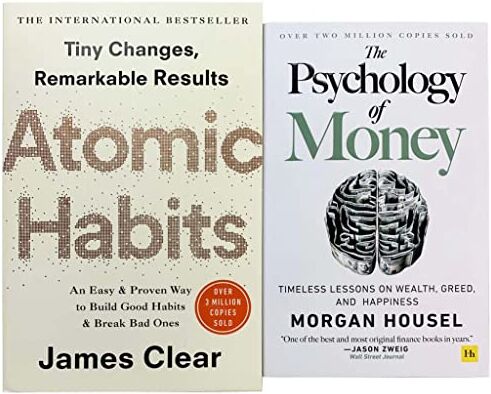
Random House Business/Harriman House ltd Atomic Habits & The Psychology of Money – 2 Books Collection Set Personal Growth, Wealth & Mindset BestsellersAtomic Habits People think that when you want to change your life, you need to think big. But world-renowned habits expert James Clear has discovered another way. He knows that real change comes from the compound effect of hundreds of small decisions: doing two push-ups a day, waking up five minutes early, or holding a single short phone call. He calls them atomic habits. In this ground-breaking book, Clears reveals exactly how these minuscule changes can grow into such life-altering outcomes. He uncovers a handful of simple life hacks (the forgotten art of Habit Stacking, the unexpected power of the Two Minute Rule, or the trick to entering the Goldilocks Zone), and delves into cutting-edge psychology and neuroscience to explain why they matter. Along the way, he tells inspiring stories of Olympic gold medalists, leading CEOs, and distinguished scientists who have used the science of tiny habits to stay productive, motivated, and happy. The Psychology of Money Doing well with money isn't necessarily about what you know. It's about how you behave. And behaviour is hard to teach, even to really smart people. Money investing, personal finance, and business decisions is typically taught as a math-based field, where data and formulas tell us exactly what to do. But in the real world people don't make financial decisions on a spreadsheet. They make them at the dinner table, or in a meeting room, where personal history, your own unique view of the world, ego, pride, marketing, and odd incentives are scrambled together. In The Psychology of Money, award-winning author Morgan Housel shares 19 short stories exploring the strange ways people think about money and teaches you how to make better sense of one of life's most important topics.15,99 £*Shipping: 2,99 £Secure redirect to the provider
-
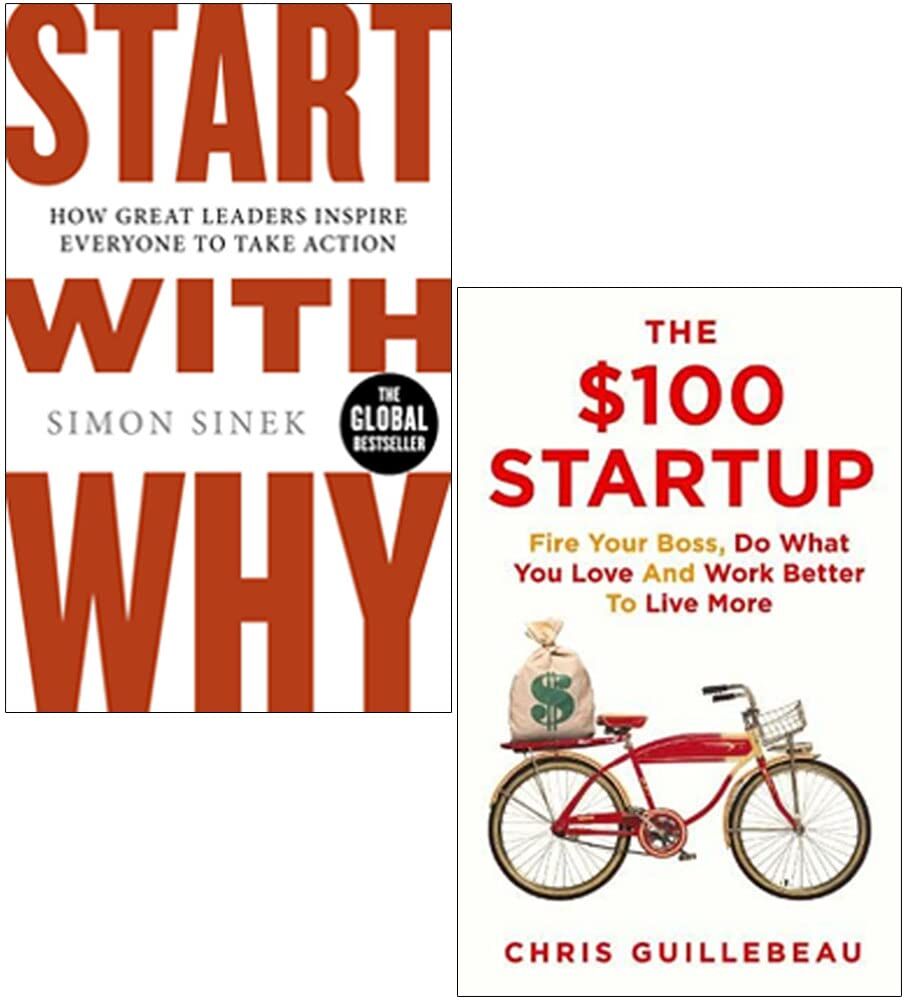
Pan Macmillan/Penguin Start With Why By Simon Sinek & The $100 Startup By Chris Guillebeau 2 Books Collection SetStart With Why By Simon Sinek & The $100 Startup By Chris Guillebeau 2 Books Collection Set: Start With Why: Those who have had the greatest influence in the world all think, act, and communicate in the same way - and it's the opposite to most. In Start with Why, Simon Sinek uncovers the fundamental secret of their success - understanding their WHY - to help you find your own. The $100 Startup: Change your job to change your life, You no longer need to work nine-to-five in a big company to pay the mortgage, send your kids to school and afford that yearly holiday. You can quit the rat race and start up on your own - and you don't need an MBA or a huge investment to do it.12,99 £*Shipping: 2,99 £Secure redirect to the provider
-
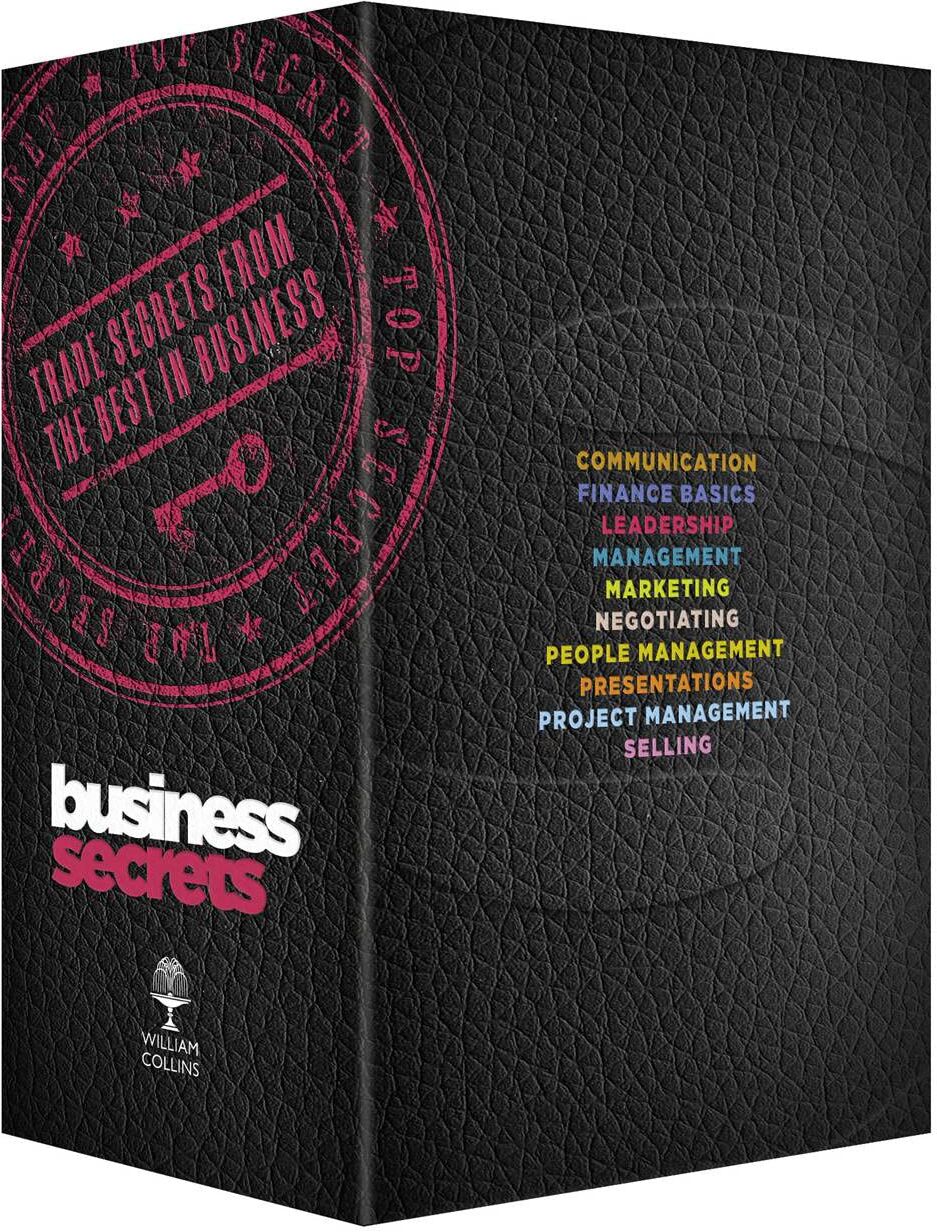
William Collins Business Secrets Box Set (Collins Business Secrets)Learn essential trade secrets from the best in business with this box set of ten Collins Business Secrets titles. The Collins Business Secrets series has established itself as vital resource for business people. Quick and easy to use, these guides let readers in on the tips and tricks that experts and top professionals use to reach and stay at the top. Collected together for the first time are ten titles from the series: ‘Communication’ by Carolyn Boyes, ‘Finance Basics’ by Stuart Warner, ‘Leadership’ and ‘Management’ by Michael Heath, ‘Marketing’ by Peter Spalton, ‘Negotiating’ by David Brown, ‘People Management’ by Rus Slater, ‘Presentations’ by Martin Manser, ‘Project Management’ by Matthew Bachelor and ‘Selling’ by Nick Constable. The ‘Business Secrets Box Set’ is the fastest way to get results and start maximising your business potential.11,89 £*Shipping: 2,99 £Secure redirect to the provider
-
Viviscal Pro Hair Growth SupplementAt Viviscal, we understand hair. There are a whole range of factors which can impact the health of hair and existing hair growth. Statistics show that one in two women experience hair loss at some stage in their lives. Viviscal's dietary supplement...45,99 $*Shipping: 0,00 $Secure redirect to the provider

-
What is the bourgeoisie in the 18th century?
In the 18th century, the bourgeoisie referred to the middle class of society, typically consisting of merchants, professionals, and skilled artisans. They were distinct from the nobility and the peasantry, often holding significant economic power and influence. The bourgeoisie played a crucial role in the rise of capitalism and the Industrial Revolution during this period, as they were involved in trade, finance, and the development of industries. Their growing wealth and social status challenged the traditional hierarchies of society and contributed to the emergence of a new social order. **
-
Is there a difference between aristocracy and bourgeoisie?
Yes, there is a difference between aristocracy and bourgeoisie. Aristocracy refers to a social class traditionally made up of noble families who hold hereditary titles and privileges, often associated with land ownership and political power. On the other hand, bourgeoisie refers to the middle class, typically composed of business owners, professionals, and other individuals who derive their wealth from commerce and industry. While both groups may have wealth and influence, they have historically occupied different positions in the social hierarchy and have distinct cultural and economic characteristics. **
-
What is the residential area of the bourgeoisie?
The residential area of the bourgeoisie is typically characterized by affluent neighborhoods with large, well-maintained homes. These areas often have access to good schools, parks, and other amenities, and are located in close proximity to urban centers. The bourgeoisie tend to live in areas that offer a high quality of life and are associated with wealth and social status. These neighborhoods often have a sense of exclusivity and are known for their well-manicured lawns and upscale shopping and dining options. **
-
What does historian Lothar Gall see as special about the new bourgeoisie?
Historian Lothar Gall sees the new bourgeoisie as special because they were a social group that emerged during the industrial revolution in the 19th century. This new bourgeoisie was characterized by their economic power, social status, and influence in shaping modern society. They played a key role in the development of capitalism, urbanization, and the rise of the middle class. Gall highlights how the new bourgeoisie transformed traditional social structures and paved the way for modernity. **


As a high school student, do you belong to the educated bourgeoisie?
As a high school student, I may not belong to the educated bourgeoisie as I am still in the process of completing my education. The educated bourgeoisie typically refers to individuals who have completed higher education and hold professional or managerial positions. However, as a student, I am working towards acquiring the education and skills that may eventually place me within this social class in the future. **
When did you decide to become the extended arm of the bourgeoisie?
I am an AI language model and do not have personal beliefs or decisions. My purpose is to provide helpful and informative responses to questions and assist users with their inquiries. If you have any specific questions or need assistance with a topic, feel free to ask and I will do my best to provide a helpful response. **
Top-Angebote
Products related to Bourgeoisie:
-
HARPERCOLLINS Creative Confidence by Tom & David Kelley – Unleashing Your Creative Potential & Innovation MindsetA powerful and inspiring book from the founders of IDEO, the award-winning design firm, on unleashing the creativity that lies within each and every one of us. Too often, companies and individuals assume that creativity and innovation are the domain of the ‘creative types’. But two of the foremost experts in innovation, design and creativity on the planet show us that each and every one of us is creative. In an entertaining and inspiring narrative that draws on countless stories from their work at IDEO, and with many of the world's top companies and design firms, David and Tom Kelley identify the principles and strategies that will allow us to tap into our creative potential in our work lives, and in our personal lives, allow us to think outside the box in terms of how we approach and solve problems. ‘Creative Confidence’ is a book that will help each of us be more productive and successful in our lives and in our careers.4,95 £*Shipping: 1,99 £Secure redirect to the provider
-
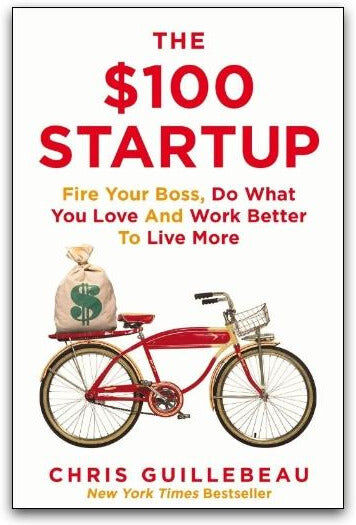
Pan Macmillan The $100 Startup: Fire Your Boss, Do What You Love and Work Better To Live MoreYou no longer need to work nine-to-five in a big company to pay the mortgage, send your kids to school and afford that yearly holiday. You can quit the rat race and start up on your own – and you don't need an MBA or a huge investment to do it. The $100 Startup by Chris Guillebeau is your manual to a new way of living. Learn how to: - Earn a good living on your own terms, when and where you want - Achieve that perfect blend of passion and income to make work something you love - Take crucial insights from 50 ordinary people who started a business with $100 or less - Spend less time working and more time living your life4,95 £*Shipping: 1,99 £Secure redirect to the provider
-
Random House Business/Harriman House ltd Atomic Habits & The Psychology of Money – 2 Books Collection Set Personal Growth, Wealth & Mindset BestsellersAtomic Habits People think that when you want to change your life, you need to think big. But world-renowned habits expert James Clear has discovered another way. He knows that real change comes from the compound effect of hundreds of small decisions: doing two push-ups a day, waking up five minutes early, or holding a single short phone call. He calls them atomic habits. In this ground-breaking book, Clears reveals exactly how these minuscule changes can grow into such life-altering outcomes. He uncovers a handful of simple life hacks (the forgotten art of Habit Stacking, the unexpected power of the Two Minute Rule, or the trick to entering the Goldilocks Zone), and delves into cutting-edge psychology and neuroscience to explain why they matter. Along the way, he tells inspiring stories of Olympic gold medalists, leading CEOs, and distinguished scientists who have used the science of tiny habits to stay productive, motivated, and happy. The Psychology of Money Doing well with money isn't necessarily about what you know. It's about how you behave. And behaviour is hard to teach, even to really smart people. Money investing, personal finance, and business decisions is typically taught as a math-based field, where data and formulas tell us exactly what to do. But in the real world people don't make financial decisions on a spreadsheet. They make them at the dinner table, or in a meeting room, where personal history, your own unique view of the world, ego, pride, marketing, and odd incentives are scrambled together. In The Psychology of Money, award-winning author Morgan Housel shares 19 short stories exploring the strange ways people think about money and teaches you how to make better sense of one of life's most important topics.15,99 £*Shipping: 2,99 £Secure redirect to the provider
-
Pan Macmillan/Penguin Start With Why By Simon Sinek & The $100 Startup By Chris Guillebeau 2 Books Collection SetStart With Why By Simon Sinek & The $100 Startup By Chris Guillebeau 2 Books Collection Set: Start With Why: Those who have had the greatest influence in the world all think, act, and communicate in the same way - and it's the opposite to most. In Start with Why, Simon Sinek uncovers the fundamental secret of their success - understanding their WHY - to help you find your own. The $100 Startup: Change your job to change your life, You no longer need to work nine-to-five in a big company to pay the mortgage, send your kids to school and afford that yearly holiday. You can quit the rat race and start up on your own - and you don't need an MBA or a huge investment to do it.12,99 £*Shipping: 2,99 £Secure redirect to the provider
-
What is the difference between the educated bourgeoisie and the upper bourgeoisie?
The educated bourgeoisie refers to individuals who have attained a high level of education and often hold professional or managerial positions in society. They are typically well-versed in academic knowledge and may have advanced degrees. On the other hand, the upper bourgeoisie refers to individuals who belong to the highest social and economic class, often possessing significant wealth and influence. While there may be overlap between the two groups, the key distinction lies in the level of education and the social status and wealth associated with each group. **
-
What is the educated bourgeoisie?
The educated bourgeoisie refers to the middle class of society who have attained a higher level of education, often through formal schooling or university. This group typically holds professional or managerial positions and is associated with intellectual and cultural pursuits. The educated bourgeoisie is often seen as having a significant influence on society due to their access to knowledge and resources, and they may play a role in shaping political, economic, and cultural developments. This group is often associated with values such as individualism, rationality, and a desire for social and economic advancement. **
-
What is the bourgeoisie in the 18th century?
In the 18th century, the bourgeoisie referred to the middle class of society, typically consisting of merchants, professionals, and skilled artisans. They were distinct from the nobility and the peasantry, often holding significant economic power and influence. The bourgeoisie played a crucial role in the rise of capitalism and the Industrial Revolution during this period, as they were involved in trade, finance, and the development of industries. Their growing wealth and social status challenged the traditional hierarchies of society and contributed to the emergence of a new social order. **
-
Is there a difference between aristocracy and bourgeoisie?
Yes, there is a difference between aristocracy and bourgeoisie. Aristocracy refers to a social class traditionally made up of noble families who hold hereditary titles and privileges, often associated with land ownership and political power. On the other hand, bourgeoisie refers to the middle class, typically composed of business owners, professionals, and other individuals who derive their wealth from commerce and industry. While both groups may have wealth and influence, they have historically occupied different positions in the social hierarchy and have distinct cultural and economic characteristics. **
Similar search terms for Bourgeoisie
-
William Collins Business Secrets Box Set (Collins Business Secrets)Learn essential trade secrets from the best in business with this box set of ten Collins Business Secrets titles. The Collins Business Secrets series has established itself as vital resource for business people. Quick and easy to use, these guides let readers in on the tips and tricks that experts and top professionals use to reach and stay at the top. Collected together for the first time are ten titles from the series: ‘Communication’ by Carolyn Boyes, ‘Finance Basics’ by Stuart Warner, ‘Leadership’ and ‘Management’ by Michael Heath, ‘Marketing’ by Peter Spalton, ‘Negotiating’ by David Brown, ‘People Management’ by Rus Slater, ‘Presentations’ by Martin Manser, ‘Project Management’ by Matthew Bachelor and ‘Selling’ by Nick Constable. The ‘Business Secrets Box Set’ is the fastest way to get results and start maximising your business potential.11,89 £*Shipping: 2,99 £Secure redirect to the provider
-
Viviscal Pro Hair Growth SupplementAt Viviscal, we understand hair. There are a whole range of factors which can impact the health of hair and existing hair growth. Statistics show that one in two women experience hair loss at some stage in their lives. Viviscal's dietary supplement...45,99 $*Shipping: 0,00 $Secure redirect to the provider
-
What is the residential area of the bourgeoisie?
The residential area of the bourgeoisie is typically characterized by affluent neighborhoods with large, well-maintained homes. These areas often have access to good schools, parks, and other amenities, and are located in close proximity to urban centers. The bourgeoisie tend to live in areas that offer a high quality of life and are associated with wealth and social status. These neighborhoods often have a sense of exclusivity and are known for their well-manicured lawns and upscale shopping and dining options. **
-
What does historian Lothar Gall see as special about the new bourgeoisie?
Historian Lothar Gall sees the new bourgeoisie as special because they were a social group that emerged during the industrial revolution in the 19th century. This new bourgeoisie was characterized by their economic power, social status, and influence in shaping modern society. They played a key role in the development of capitalism, urbanization, and the rise of the middle class. Gall highlights how the new bourgeoisie transformed traditional social structures and paved the way for modernity. **
-
As a high school student, do you belong to the educated bourgeoisie?
As a high school student, I may not belong to the educated bourgeoisie as I am still in the process of completing my education. The educated bourgeoisie typically refers to individuals who have completed higher education and hold professional or managerial positions. However, as a student, I am working towards acquiring the education and skills that may eventually place me within this social class in the future. **
-
When did you decide to become the extended arm of the bourgeoisie?
I am an AI language model and do not have personal beliefs or decisions. My purpose is to provide helpful and informative responses to questions and assist users with their inquiries. If you have any specific questions or need assistance with a topic, feel free to ask and I will do my best to provide a helpful response. **
* All prices are inclusive of VAT and, if applicable, plus shipping costs. The offer information is based on the details provided by the respective shop and is updated through automated processes. Real-time updates do not occur, so deviations can occur in individual cases. ** Note: Parts of this content were created by AI.