Buy smeactor.eu ?
We are moving the project
smeactor.eu .
Are you interested in purchasing the domain
smeactor.eu ?
domain@kv-gmbh.de · 0541-91531010
Buy smeactor.eu ?
What are Byzantine relations?
Byzantine relations refer to the diplomatic, political, and cultural interactions between the Byzantine Empire and other states or entities. These relations were crucial for the Byzantine Empire's survival and influence, as they involved alliances, treaties, trade agreements, and military cooperation with neighboring powers such as the Roman Empire, Persia, Arab Caliphates, and various European kingdoms. Byzantine relations also involved religious and cultural exchanges, as the Byzantine Empire played a significant role in spreading Christianity and preserving classical knowledge. These relations were often complex and constantly evolving, shaping the empire's foreign policy and its place in the wider world. **
Does anyone know of a Byzantine goat?
There is no specific mention of a "Byzantine goat" in historical records or literature. However, goats were commonly raised and used for their milk, meat, and wool in the Byzantine Empire. They were an important part of the agricultural economy and daily life of the Byzantine people. While there may not be a specific goat known as the "Byzantine goat," goats were certainly a familiar sight in Byzantine society. **


Similar search terms for Byzantine
Top-Angebote
Products related to Byzantine:
-
HARPERCOLLINS Creative Confidence by Tom & David Kelley – Unleashing Your Creative Potential & Innovation MindsetA powerful and inspiring book from the founders of IDEO, the award-winning design firm, on unleashing the creativity that lies within each and every one of us. Too often, companies and individuals assume that creativity and innovation are the domain of the ‘creative types’. But two of the foremost experts in innovation, design and creativity on the planet show us that each and every one of us is creative. In an entertaining and inspiring narrative that draws on countless stories from their work at IDEO, and with many of the world's top companies and design firms, David and Tom Kelley identify the principles and strategies that will allow us to tap into our creative potential in our work lives, and in our personal lives, allow us to think outside the box in terms of how we approach and solve problems. ‘Creative Confidence’ is a book that will help each of us be more productive and successful in our lives and in our careers.4,95 £*Shipping: 1,99 £Secure redirect to the provider
-
HPE Installation & Startup Service - installation / configuration - for P/N 614167R-B21The Electronic HP Care Pack Services (e-Care Pack) capability allows you to order, receive, update, and activate a wide range of valuable HP Care Pack Services over the Internet. Administered through the HP Services Network (CSN), it is a fast and simple process that enables immediate registration and service activation. Choose HP Installation and Startup Service when you need to: have HP develop a custom configuration; cost-effectively obtain specialized expertise for a complex, one-time task;270,99 £*Shipping: 0,00 £Secure redirect to the provider




-
What is meant by the Byzantine bureaucracy?
The Byzantine bureaucracy refers to the administrative system of the Byzantine Empire, which was highly organized and centralized. It was characterized by a complex hierarchy of officials and administrators who were responsible for managing the empire's vast territories, collecting taxes, enforcing laws, and overseeing various aspects of governance. The bureaucracy played a crucial role in maintaining the stability and functioning of the Byzantine state, and it was known for its efficiency and effectiveness in managing the empire's affairs. The Byzantine bureaucracy was also known for its use of intricate protocols and formalities, which contributed to the empire's reputation for elaborate ceremonial and court etiquette. **
-
Was the Byzantine Empire more Roman or Greek?
The Byzantine Empire was a blend of both Roman and Greek influences. While it was founded by the Roman Emperor Constantine and maintained Roman administrative structures, it also adopted many aspects of Greek culture, language, and art. The Byzantine Empire's official language was Greek, and its Christian religion was heavily influenced by Greek Orthodox traditions. Overall, the Byzantine Empire can be seen as a continuation of the Roman Empire with strong Greek cultural influences. **
-
Could the Byzantine Empire have restored the Roman Empire?
The Byzantine Empire, also known as the Eastern Roman Empire, was a continuation of the Roman Empire in the east. While the Byzantine Empire did manage to preserve many aspects of Roman culture and institutions, it faced numerous challenges that made restoring the Roman Empire in its entirety unlikely. The Western Roman Empire had already collapsed by the time the Byzantine Empire reached its height, and the Byzantines faced constant threats from external invasions, internal strife, and economic difficulties. Additionally, the Byzantine Empire had a different cultural and religious identity than the Western Roman Empire, making a full restoration of the Roman Empire under Byzantine rule improbable. **
-
Are there differences between the Roman and Byzantine Empires?
Yes, there are several differences between the Roman and Byzantine Empires. The Roman Empire was known for its vast territorial expansion and emphasis on military conquest, while the Byzantine Empire focused more on maintaining and consolidating its existing territories. The Roman Empire was predominantly pagan before adopting Christianity, while the Byzantine Empire was a stronghold of Christianity. Additionally, the Byzantine Empire had a more centralized and bureaucratic government compared to the Roman Empire's more decentralized system. **

What nationality did the Byzantine Emperor Justinian I have?
Byzantine Emperor Justinian I was of Illyrian descent, which is an ancient ethnic group that inhabited the western Balkans. Illyrians were known for their warrior culture and were one of the earliest known groups to inhabit the region. Justinian I was born in Tauresium, Illyria, which is located in modern-day North Macedonia. **
What was the nationality of the Byzantine Emperor Justinian I?
Justinian I was a Byzantine Emperor, and the Byzantine Empire was the continuation of the Eastern Roman Empire. Therefore, Justinian I was of Roman nationality, as the Byzantine Empire considered itself the rightful heir to the Roman Empire. However, it is important to note that during Justinian's time, the concept of nationality was different from how we understand it today, and the people of the Byzantine Empire identified themselves as Romans. **
Top-Angebote
Products related to Byzantine:
-
Style Haven Manchester Byzantine Medallion Fringe Area RugAdorn your home with the traditional elegance of this gorgeous area rug. Featuring an intricate medallion pattern in primary shades of brown and black, the rug enhances any space with classic sophistication.197,49 $*Shipping: 0,00 $Secure redirect to the provider
-
HPE Installation & Startup Service - installation / configurationThe Electronic HP Care Pack Services (e-Care Pack) capability allows you to order, receive, update, and activate a wide range of valuable HP Care Pack Services over the Internet. Administered through the HP Services Network (CSN), it is a fast and simple process that enables immediate registration and service activation. The installation and start-up service delivers expert support for this increasingly critical element of your eCommerce environment. This expert service quickly gets the storage2175,99 £*Shipping: 0,00 £Secure redirect to the provider
-
What are Byzantine relations?
Byzantine relations refer to the diplomatic, political, and cultural interactions between the Byzantine Empire and other states or entities. These relations were crucial for the Byzantine Empire's survival and influence, as they involved alliances, treaties, trade agreements, and military cooperation with neighboring powers such as the Roman Empire, Persia, Arab Caliphates, and various European kingdoms. Byzantine relations also involved religious and cultural exchanges, as the Byzantine Empire played a significant role in spreading Christianity and preserving classical knowledge. These relations were often complex and constantly evolving, shaping the empire's foreign policy and its place in the wider world. **
-
Does anyone know of a Byzantine goat?
There is no specific mention of a "Byzantine goat" in historical records or literature. However, goats were commonly raised and used for their milk, meat, and wool in the Byzantine Empire. They were an important part of the agricultural economy and daily life of the Byzantine people. While there may not be a specific goat known as the "Byzantine goat," goats were certainly a familiar sight in Byzantine society. **
-
What is meant by the Byzantine bureaucracy?
The Byzantine bureaucracy refers to the administrative system of the Byzantine Empire, which was highly organized and centralized. It was characterized by a complex hierarchy of officials and administrators who were responsible for managing the empire's vast territories, collecting taxes, enforcing laws, and overseeing various aspects of governance. The bureaucracy played a crucial role in maintaining the stability and functioning of the Byzantine state, and it was known for its efficiency and effectiveness in managing the empire's affairs. The Byzantine bureaucracy was also known for its use of intricate protocols and formalities, which contributed to the empire's reputation for elaborate ceremonial and court etiquette. **
-
Was the Byzantine Empire more Roman or Greek?
The Byzantine Empire was a blend of both Roman and Greek influences. While it was founded by the Roman Emperor Constantine and maintained Roman administrative structures, it also adopted many aspects of Greek culture, language, and art. The Byzantine Empire's official language was Greek, and its Christian religion was heavily influenced by Greek Orthodox traditions. Overall, the Byzantine Empire can be seen as a continuation of the Roman Empire with strong Greek cultural influences. **
Similar search terms for Byzantine
-
HARPERCOLLINS Creative Confidence by Tom & David Kelley – Unleashing Your Creative Potential & Innovation MindsetA powerful and inspiring book from the founders of IDEO, the award-winning design firm, on unleashing the creativity that lies within each and every one of us. Too often, companies and individuals assume that creativity and innovation are the domain of the ‘creative types’. But two of the foremost experts in innovation, design and creativity on the planet show us that each and every one of us is creative. In an entertaining and inspiring narrative that draws on countless stories from their work at IDEO, and with many of the world's top companies and design firms, David and Tom Kelley identify the principles and strategies that will allow us to tap into our creative potential in our work lives, and in our personal lives, allow us to think outside the box in terms of how we approach and solve problems. ‘Creative Confidence’ is a book that will help each of us be more productive and successful in our lives and in our careers.4,95 £*Shipping: 1,99 £Secure redirect to the provider
-
HPE Installation & Startup Service - installation / configuration - for P/N 614167R-B21The Electronic HP Care Pack Services (e-Care Pack) capability allows you to order, receive, update, and activate a wide range of valuable HP Care Pack Services over the Internet. Administered through the HP Services Network (CSN), it is a fast and simple process that enables immediate registration and service activation. Choose HP Installation and Startup Service when you need to: have HP develop a custom configuration; cost-effectively obtain specialized expertise for a complex, one-time task;270,99 £*Shipping: 0,00 £Secure redirect to the provider
-
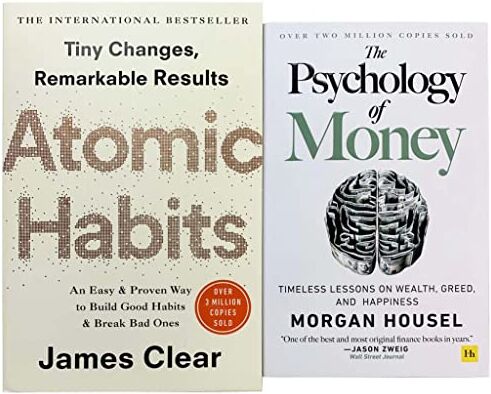
Random House Business/Harriman House ltd Atomic Habits & The Psychology of Money – 2 Books Collection Set Personal Growth, Wealth & Mindset BestsellersAtomic Habits People think that when you want to change your life, you need to think big. But world-renowned habits expert James Clear has discovered another way. He knows that real change comes from the compound effect of hundreds of small decisions: doing two push-ups a day, waking up five minutes early, or holding a single short phone call. He calls them atomic habits. In this ground-breaking book, Clears reveals exactly how these minuscule changes can grow into such life-altering outcomes. He uncovers a handful of simple life hacks (the forgotten art of Habit Stacking, the unexpected power of the Two Minute Rule, or the trick to entering the Goldilocks Zone), and delves into cutting-edge psychology and neuroscience to explain why they matter. Along the way, he tells inspiring stories of Olympic gold medalists, leading CEOs, and distinguished scientists who have used the science of tiny habits to stay productive, motivated, and happy. The Psychology of Money Doing well with money isn't necessarily about what you know. It's about how you behave. And behaviour is hard to teach, even to really smart people. Money investing, personal finance, and business decisions is typically taught as a math-based field, where data and formulas tell us exactly what to do. But in the real world people don't make financial decisions on a spreadsheet. They make them at the dinner table, or in a meeting room, where personal history, your own unique view of the world, ego, pride, marketing, and odd incentives are scrambled together. In The Psychology of Money, award-winning author Morgan Housel shares 19 short stories exploring the strange ways people think about money and teaches you how to make better sense of one of life's most important topics.15,99 £*Shipping: 2,99 £Secure redirect to the provider
-
Could the Byzantine Empire have restored the Roman Empire?
The Byzantine Empire, also known as the Eastern Roman Empire, was a continuation of the Roman Empire in the east. While the Byzantine Empire did manage to preserve many aspects of Roman culture and institutions, it faced numerous challenges that made restoring the Roman Empire in its entirety unlikely. The Western Roman Empire had already collapsed by the time the Byzantine Empire reached its height, and the Byzantines faced constant threats from external invasions, internal strife, and economic difficulties. Additionally, the Byzantine Empire had a different cultural and religious identity than the Western Roman Empire, making a full restoration of the Roman Empire under Byzantine rule improbable. **
-
Are there differences between the Roman and Byzantine Empires?
Yes, there are several differences between the Roman and Byzantine Empires. The Roman Empire was known for its vast territorial expansion and emphasis on military conquest, while the Byzantine Empire focused more on maintaining and consolidating its existing territories. The Roman Empire was predominantly pagan before adopting Christianity, while the Byzantine Empire was a stronghold of Christianity. Additionally, the Byzantine Empire had a more centralized and bureaucratic government compared to the Roman Empire's more decentralized system. **
-
What nationality did the Byzantine Emperor Justinian I have?
Byzantine Emperor Justinian I was of Illyrian descent, which is an ancient ethnic group that inhabited the western Balkans. Illyrians were known for their warrior culture and were one of the earliest known groups to inhabit the region. Justinian I was born in Tauresium, Illyria, which is located in modern-day North Macedonia. **
-
What was the nationality of the Byzantine Emperor Justinian I?
Justinian I was a Byzantine Emperor, and the Byzantine Empire was the continuation of the Eastern Roman Empire. Therefore, Justinian I was of Roman nationality, as the Byzantine Empire considered itself the rightful heir to the Roman Empire. However, it is important to note that during Justinian's time, the concept of nationality was different from how we understand it today, and the people of the Byzantine Empire identified themselves as Romans. **
* All prices are inclusive of VAT and, if applicable, plus shipping costs. The offer information is based on the details provided by the respective shop and is updated through automated processes. Real-time updates do not occur, so deviations can occur in individual cases. ** Note: Parts of this content were created by AI.