Buy smeactor.eu ?
We are moving the project
smeactor.eu .
Are you interested in purchasing the domain
smeactor.eu ?
domain@kv-gmbh.de · 0541-91531010
Buy smeactor.eu ?
What are microorganisms?
Microorganisms are tiny living organisms that are too small to be seen with the naked eye. They include bacteria, viruses, fungi, and protists. Microorganisms can be found in almost every environment on Earth, including soil, water, and the human body. While some microorganisms can cause disease, many are beneficial and play important roles in processes such as decomposition, nutrient cycling, and food production. **
How do microorganisms reproduce?
Microorganisms reproduce through a process called binary fission, where a single cell divides into two identical daughter cells. This process allows microorganisms to rapidly increase in number. Some microorganisms, like bacteria, can also reproduce through conjugation, where genetic material is exchanged between two cells. Overall, microorganisms have various methods of reproduction that allow them to adapt and thrive in different environments. **

Similar search terms for Microorganisms
Top-Angebote
Products related to Microorganisms:
-
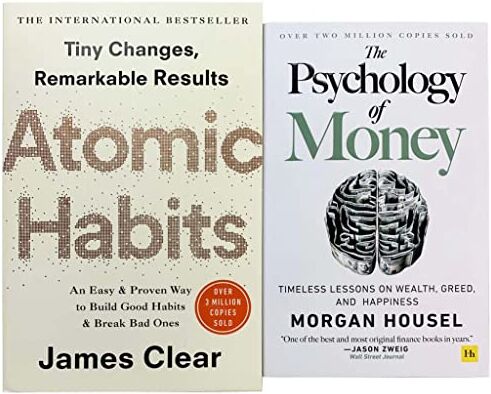
Random House Business/Harriman House ltd Atomic Habits & The Psychology of Money – 2 Books Collection Set Personal Growth, Wealth & Mindset BestsellersAtomic Habits People think that when you want to change your life, you need to think big. But world-renowned habits expert James Clear has discovered another way. He knows that real change comes from the compound effect of hundreds of small decisions: doing two push-ups a day, waking up five minutes early, or holding a single short phone call. He calls them atomic habits. In this ground-breaking book, Clears reveals exactly how these minuscule changes can grow into such life-altering outcomes. He uncovers a handful of simple life hacks (the forgotten art of Habit Stacking, the unexpected power of the Two Minute Rule, or the trick to entering the Goldilocks Zone), and delves into cutting-edge psychology and neuroscience to explain why they matter. Along the way, he tells inspiring stories of Olympic gold medalists, leading CEOs, and distinguished scientists who have used the science of tiny habits to stay productive, motivated, and happy. The Psychology of Money Doing well with money isn't necessarily about what you know. It's about how you behave. And behaviour is hard to teach, even to really smart people. Money investing, personal finance, and business decisions is typically taught as a math-based field, where data and formulas tell us exactly what to do. But in the real world people don't make financial decisions on a spreadsheet. They make them at the dinner table, or in a meeting room, where personal history, your own unique view of the world, ego, pride, marketing, and odd incentives are scrambled together. In The Psychology of Money, award-winning author Morgan Housel shares 19 short stories exploring the strange ways people think about money and teaches you how to make better sense of one of life's most important topics.15,99 £*Shipping: 2,99 £Secure redirect to the provider
-
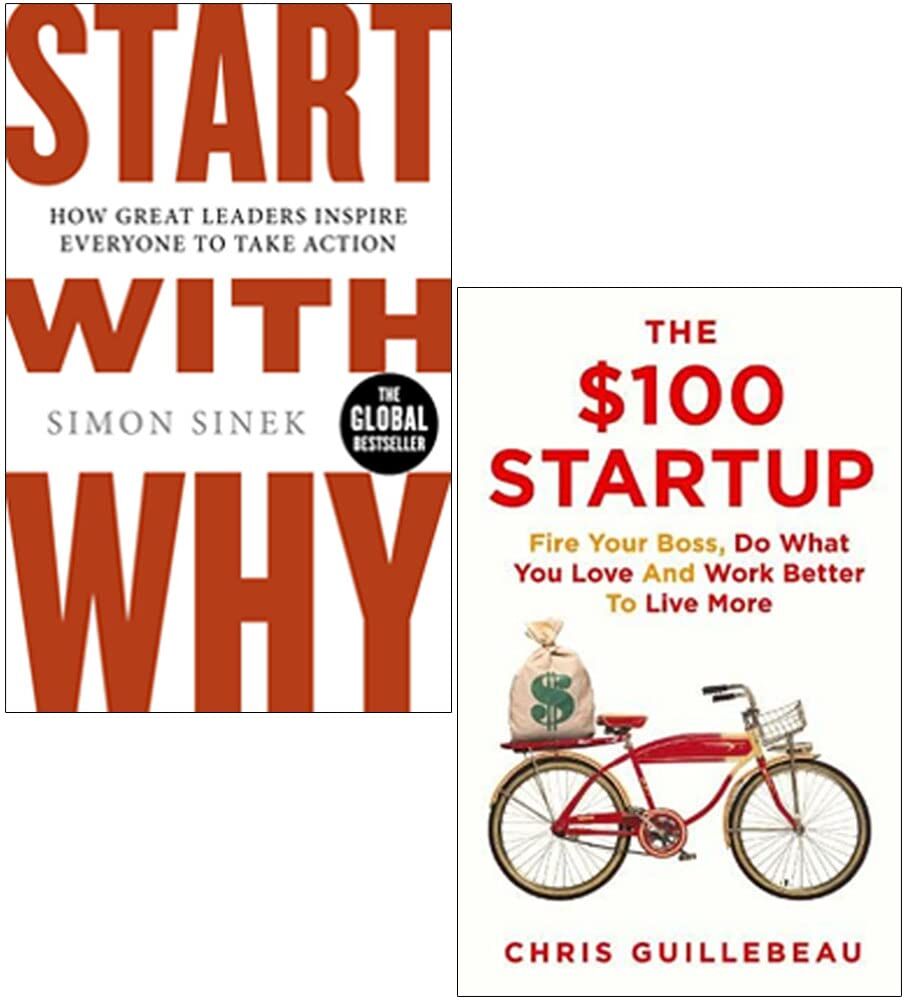
Pan Macmillan/Penguin Start With Why By Simon Sinek & The $100 Startup By Chris Guillebeau 2 Books Collection SetStart With Why By Simon Sinek & The $100 Startup By Chris Guillebeau 2 Books Collection Set: Start With Why: Those who have had the greatest influence in the world all think, act, and communicate in the same way - and it's the opposite to most. In Start with Why, Simon Sinek uncovers the fundamental secret of their success - understanding their WHY - to help you find your own. The $100 Startup: Change your job to change your life, You no longer need to work nine-to-five in a big company to pay the mortgage, send your kids to school and afford that yearly holiday. You can quit the rat race and start up on your own - and you don't need an MBA or a huge investment to do it.12,99 £*Shipping: 2,99 £Secure redirect to the provider
-
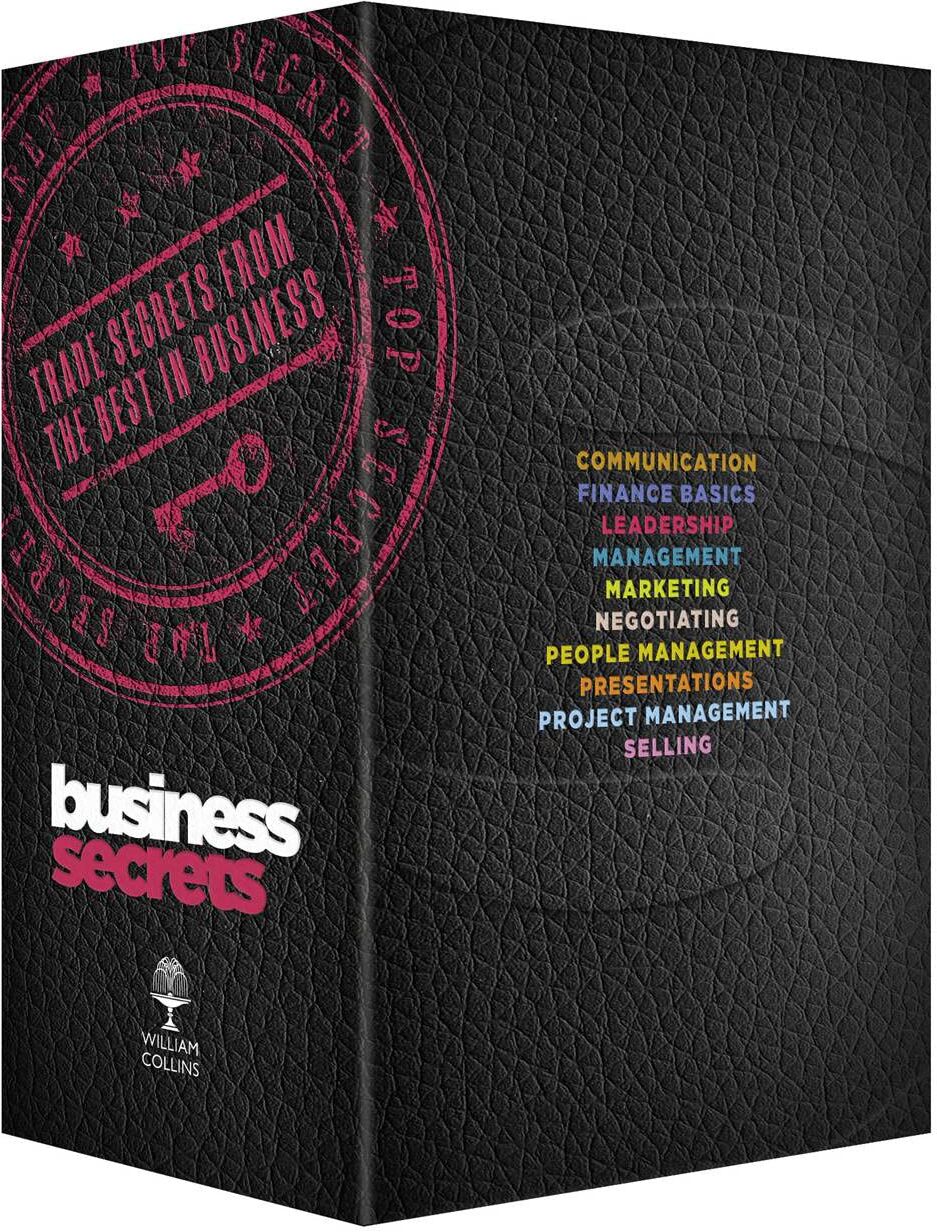
William Collins Business Secrets Box Set (Collins Business Secrets)Learn essential trade secrets from the best in business with this box set of ten Collins Business Secrets titles. The Collins Business Secrets series has established itself as vital resource for business people. Quick and easy to use, these guides let readers in on the tips and tricks that experts and top professionals use to reach and stay at the top. Collected together for the first time are ten titles from the series: ‘Communication’ by Carolyn Boyes, ‘Finance Basics’ by Stuart Warner, ‘Leadership’ and ‘Management’ by Michael Heath, ‘Marketing’ by Peter Spalton, ‘Negotiating’ by David Brown, ‘People Management’ by Rus Slater, ‘Presentations’ by Martin Manser, ‘Project Management’ by Matthew Bachelor and ‘Selling’ by Nick Constable. The ‘Business Secrets Box Set’ is the fastest way to get results and start maximising your business potential.11,89 £*Shipping: 2,99 £Secure redirect to the provider
-
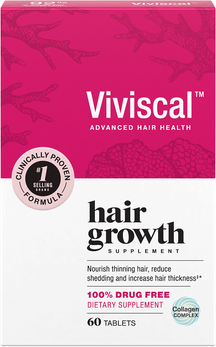
Viviscal Pro Hair Growth SupplementAt Viviscal, we understand hair. There are a whole range of factors which can impact the health of hair and existing hair growth. Statistics show that one in two women experience hair loss at some stage in their lives. Viviscal's dietary supplement...45,99 $*Shipping: 0,00 $Secure redirect to the provider
-
Can microorganisms pass through materials?
Yes, microorganisms can pass through materials depending on their size and the porosity of the material. Some microorganisms are small enough to pass through tiny openings in materials like fabrics, filters, or even some types of plastics. This is why it is important to use materials that are specifically designed to block the passage of microorganisms in certain applications, such as in medical settings or food processing. **
-
Why do microorganisms spoil food?
Microorganisms spoil food because they use the nutrients in the food as a source of energy and growth. Bacteria, molds, and yeasts are the main culprits of food spoilage, and they thrive in the right conditions of moisture, warmth, and pH levels. As they grow and reproduce, they produce enzymes and waste products that break down the food's proteins, fats, and carbohydrates, leading to changes in texture, color, flavor, and odor. This ultimately makes the food unpalatable and unsafe to eat. **
-
Do microorganisms die in acid?
Yes, many microorganisms can die in acidic conditions. Acidic environments can disrupt the cell membranes and denature the proteins of microorganisms, leading to their death. However, some microorganisms, suchjson as acidophilic bacteria, are able to survive and even thrive in acidic conditions. These acidophilic microorganisms have evolved mechanisms to maintain their internal pH and protect their cellular structures from the damaging effects of acidity. **
-
What are the smallest microorganisms?
The smallest microorganisms are bacteria and archaea. These single-celled organisms are so tiny that they can only be seen under a microscope. Some bacteria and archaea are as small as 0.2 micrometers in diameter, making them the smallest known living organisms. Despite their small size, bacteria and archaea play crucial roles in various ecosystems and are essential for many biochemical processes. **

What do microorganisms need to reproduce?
Microorganisms need a suitable environment with the right temperature, pH level, and nutrients to reproduce. They also require moisture and oxygen to carry out their metabolic processes and grow. Additionally, some microorganisms may need specific conditions such as light or darkness to reproduce successfully. Overall, providing the necessary environmental conditions is crucial for the reproduction of microorganisms. **
What types of microorganisms could arise?
Various types of microorganisms could arise, including bacteria, viruses, fungi, and protists. These microorganisms could be pathogenic, causing diseases in humans, animals, or plants, or they could be beneficial, such as those involved in nutrient cycling, decomposition, or symbiotic relationships. The specific types of microorganisms that arise would depend on the environmental conditions, available resources, and interactions with other organisms. Additionally, genetic mutations and horizontal gene transfer could contribute to the emergence of new microorganism variants. **
Top-Angebote
Products related to Microorganisms:
-
HARPERCOLLINS Creative Confidence by Tom & David Kelley – Unleashing Your Creative Potential & Innovation MindsetA powerful and inspiring book from the founders of IDEO, the award-winning design firm, on unleashing the creativity that lies within each and every one of us. Too often, companies and individuals assume that creativity and innovation are the domain of the ‘creative types’. But two of the foremost experts in innovation, design and creativity on the planet show us that each and every one of us is creative. In an entertaining and inspiring narrative that draws on countless stories from their work at IDEO, and with many of the world's top companies and design firms, David and Tom Kelley identify the principles and strategies that will allow us to tap into our creative potential in our work lives, and in our personal lives, allow us to think outside the box in terms of how we approach and solve problems. ‘Creative Confidence’ is a book that will help each of us be more productive and successful in our lives and in our careers.4,95 £*Shipping: 1,99 £Secure redirect to the provider
-
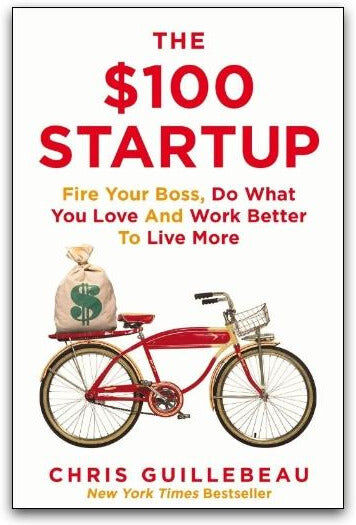
Pan Macmillan The $100 Startup: Fire Your Boss, Do What You Love and Work Better To Live MoreYou no longer need to work nine-to-five in a big company to pay the mortgage, send your kids to school and afford that yearly holiday. You can quit the rat race and start up on your own – and you don't need an MBA or a huge investment to do it. The $100 Startup by Chris Guillebeau is your manual to a new way of living. Learn how to: - Earn a good living on your own terms, when and where you want - Achieve that perfect blend of passion and income to make work something you love - Take crucial insights from 50 ordinary people who started a business with $100 or less - Spend less time working and more time living your life4,95 £*Shipping: 1,99 £Secure redirect to the provider
-
Random House Business/Harriman House ltd Atomic Habits & The Psychology of Money – 2 Books Collection Set Personal Growth, Wealth & Mindset BestsellersAtomic Habits People think that when you want to change your life, you need to think big. But world-renowned habits expert James Clear has discovered another way. He knows that real change comes from the compound effect of hundreds of small decisions: doing two push-ups a day, waking up five minutes early, or holding a single short phone call. He calls them atomic habits. In this ground-breaking book, Clears reveals exactly how these minuscule changes can grow into such life-altering outcomes. He uncovers a handful of simple life hacks (the forgotten art of Habit Stacking, the unexpected power of the Two Minute Rule, or the trick to entering the Goldilocks Zone), and delves into cutting-edge psychology and neuroscience to explain why they matter. Along the way, he tells inspiring stories of Olympic gold medalists, leading CEOs, and distinguished scientists who have used the science of tiny habits to stay productive, motivated, and happy. The Psychology of Money Doing well with money isn't necessarily about what you know. It's about how you behave. And behaviour is hard to teach, even to really smart people. Money investing, personal finance, and business decisions is typically taught as a math-based field, where data and formulas tell us exactly what to do. But in the real world people don't make financial decisions on a spreadsheet. They make them at the dinner table, or in a meeting room, where personal history, your own unique view of the world, ego, pride, marketing, and odd incentives are scrambled together. In The Psychology of Money, award-winning author Morgan Housel shares 19 short stories exploring the strange ways people think about money and teaches you how to make better sense of one of life's most important topics.15,99 £*Shipping: 2,99 £Secure redirect to the provider
-
Pan Macmillan/Penguin Start With Why By Simon Sinek & The $100 Startup By Chris Guillebeau 2 Books Collection SetStart With Why By Simon Sinek & The $100 Startup By Chris Guillebeau 2 Books Collection Set: Start With Why: Those who have had the greatest influence in the world all think, act, and communicate in the same way - and it's the opposite to most. In Start with Why, Simon Sinek uncovers the fundamental secret of their success - understanding their WHY - to help you find your own. The $100 Startup: Change your job to change your life, You no longer need to work nine-to-five in a big company to pay the mortgage, send your kids to school and afford that yearly holiday. You can quit the rat race and start up on your own - and you don't need an MBA or a huge investment to do it.12,99 £*Shipping: 2,99 £Secure redirect to the provider
-
What are microorganisms?
Microorganisms are tiny living organisms that are too small to be seen with the naked eye. They include bacteria, viruses, fungi, and protists. Microorganisms can be found in almost every environment on Earth, including soil, water, and the human body. While some microorganisms can cause disease, many are beneficial and play important roles in processes such as decomposition, nutrient cycling, and food production. **
-
How do microorganisms reproduce?
Microorganisms reproduce through a process called binary fission, where a single cell divides into two identical daughter cells. This process allows microorganisms to rapidly increase in number. Some microorganisms, like bacteria, can also reproduce through conjugation, where genetic material is exchanged between two cells. Overall, microorganisms have various methods of reproduction that allow them to adapt and thrive in different environments. **
-
Can microorganisms pass through materials?
Yes, microorganisms can pass through materials depending on their size and the porosity of the material. Some microorganisms are small enough to pass through tiny openings in materials like fabrics, filters, or even some types of plastics. This is why it is important to use materials that are specifically designed to block the passage of microorganisms in certain applications, such as in medical settings or food processing. **
-
Why do microorganisms spoil food?
Microorganisms spoil food because they use the nutrients in the food as a source of energy and growth. Bacteria, molds, and yeasts are the main culprits of food spoilage, and they thrive in the right conditions of moisture, warmth, and pH levels. As they grow and reproduce, they produce enzymes and waste products that break down the food's proteins, fats, and carbohydrates, leading to changes in texture, color, flavor, and odor. This ultimately makes the food unpalatable and unsafe to eat. **
Similar search terms for Microorganisms
-
William Collins Business Secrets Box Set (Collins Business Secrets)Learn essential trade secrets from the best in business with this box set of ten Collins Business Secrets titles. The Collins Business Secrets series has established itself as vital resource for business people. Quick and easy to use, these guides let readers in on the tips and tricks that experts and top professionals use to reach and stay at the top. Collected together for the first time are ten titles from the series: ‘Communication’ by Carolyn Boyes, ‘Finance Basics’ by Stuart Warner, ‘Leadership’ and ‘Management’ by Michael Heath, ‘Marketing’ by Peter Spalton, ‘Negotiating’ by David Brown, ‘People Management’ by Rus Slater, ‘Presentations’ by Martin Manser, ‘Project Management’ by Matthew Bachelor and ‘Selling’ by Nick Constable. The ‘Business Secrets Box Set’ is the fastest way to get results and start maximising your business potential.11,89 £*Shipping: 2,99 £Secure redirect to the provider
-
Viviscal Pro Hair Growth SupplementAt Viviscal, we understand hair. There are a whole range of factors which can impact the health of hair and existing hair growth. Statistics show that one in two women experience hair loss at some stage in their lives. Viviscal's dietary supplement...45,99 $*Shipping: 0,00 $Secure redirect to the provider
-
Do microorganisms die in acid?
Yes, many microorganisms can die in acidic conditions. Acidic environments can disrupt the cell membranes and denature the proteins of microorganisms, leading to their death. However, some microorganisms, suchjson as acidophilic bacteria, are able to survive and even thrive in acidic conditions. These acidophilic microorganisms have evolved mechanisms to maintain their internal pH and protect their cellular structures from the damaging effects of acidity. **
-
What are the smallest microorganisms?
The smallest microorganisms are bacteria and archaea. These single-celled organisms are so tiny that they can only be seen under a microscope. Some bacteria and archaea are as small as 0.2 micrometers in diameter, making them the smallest known living organisms. Despite their small size, bacteria and archaea play crucial roles in various ecosystems and are essential for many biochemical processes. **
-
What do microorganisms need to reproduce?
Microorganisms need a suitable environment with the right temperature, pH level, and nutrients to reproduce. They also require moisture and oxygen to carry out their metabolic processes and grow. Additionally, some microorganisms may need specific conditions such as light or darkness to reproduce successfully. Overall, providing the necessary environmental conditions is crucial for the reproduction of microorganisms. **
-
What types of microorganisms could arise?
Various types of microorganisms could arise, including bacteria, viruses, fungi, and protists. These microorganisms could be pathogenic, causing diseases in humans, animals, or plants, or they could be beneficial, such as those involved in nutrient cycling, decomposition, or symbiotic relationships. The specific types of microorganisms that arise would depend on the environmental conditions, available resources, and interactions with other organisms. Additionally, genetic mutations and horizontal gene transfer could contribute to the emergence of new microorganism variants. **
* All prices are inclusive of VAT and, if applicable, plus shipping costs. The offer information is based on the details provided by the respective shop and is updated through automated processes. Real-time updates do not occur, so deviations can occur in individual cases. ** Note: Parts of this content were created by AI.